Brochure
 Get in touch
 Apply
ApplyMaking of the Graduation Film “When the wind rests”
Discover the making of "When the wind rests", the graduation film by Charlotte LAFOSSAS, a 2025 graduate of MoPA’s 3D Animation program.
The story of my graduation film follows a woman who sets out to cross the Andes mountain range in search of herself and, along the way, so focused on her goal, she gradually loses sight of who she is.
My character is Lili. She is in her thirties and is an avid walker. I decided to talk about walking because it is something I truly love, and through my character, you can see all the affection I have for it.
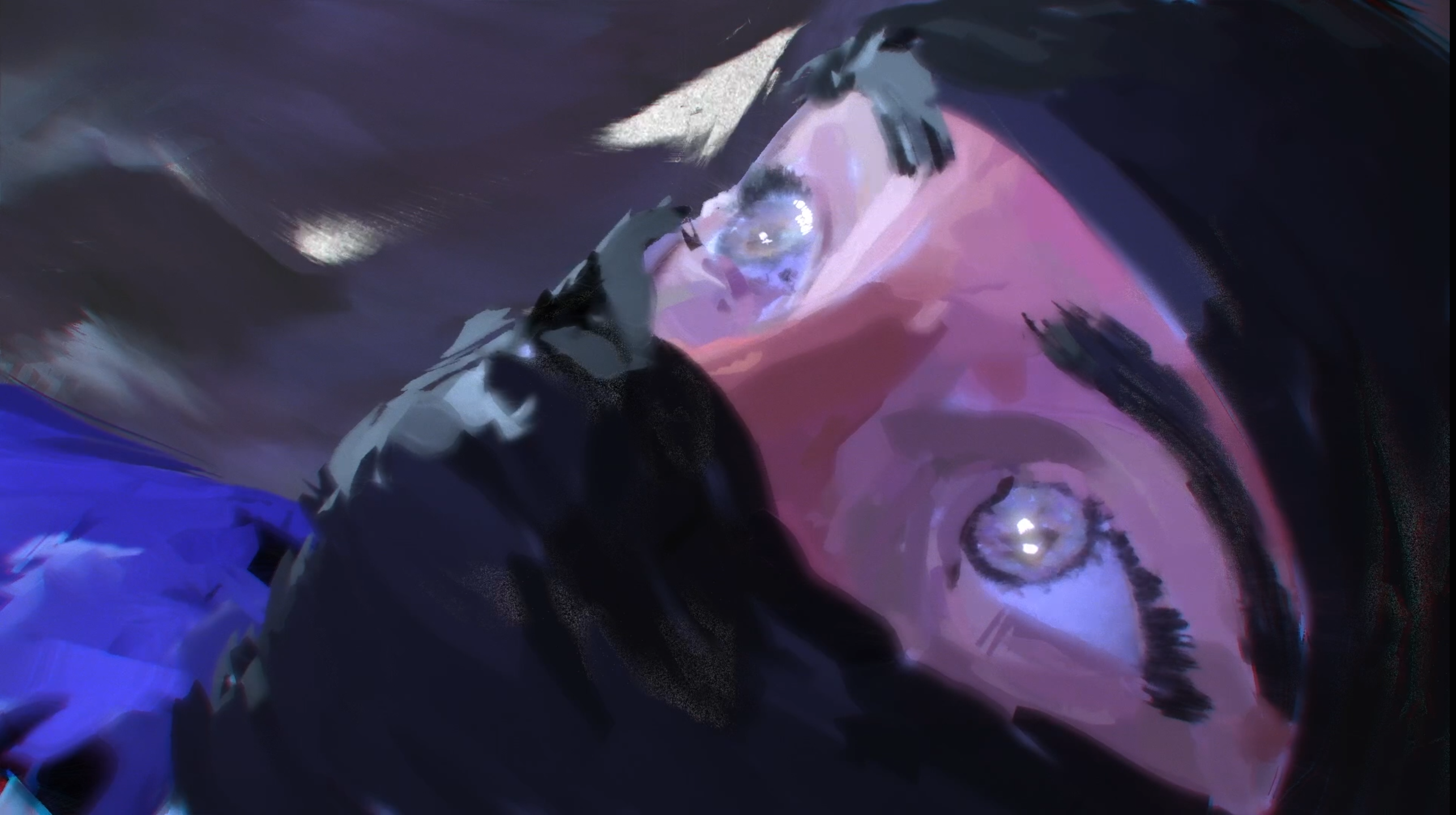
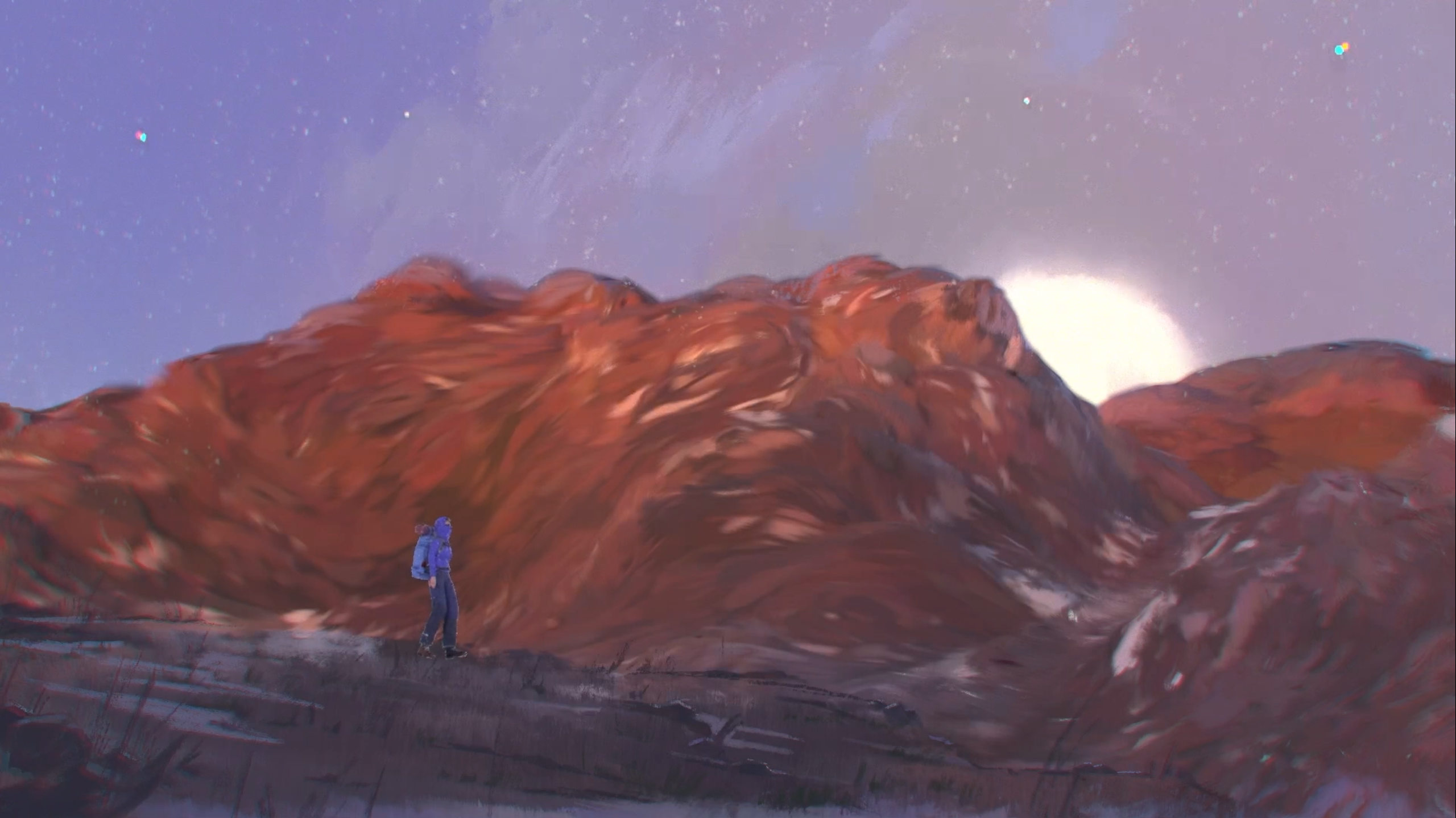
For my artistic direction, I chose a fairly hybrid 2D/3D approach. I aimed for an aesthetic that looks like a painting that is unfinished at certain moments and completed at others. I wanted the evolution of this artistic direction to mirror the emotional evolution of my character.
The moments when my character is overly focused on her objective feel empty: the painting is unfinished. And when she decides to take the time to appreciate the moment she is living, the painting gradually fills in.
To achieve this, I used Blender, particularly the Brush Stroke Tool, which allows me to generate brush strokes either procedurally or manually. In addition to the Brush Stroke Tool, I used camera mapping to create a strong 2D/3D result. This allowed me to integrate my drawings directly into the 3D environment.
For the inspirations behind my film, I drew heavily from my reading. I read a lot of coming-of-age and journey novels, such as those by Sylvain Tesson and Sarah Marquis. I had the opportunity to create the film I wanted for an entire year without constraints, so I decided to make my own coming-of-age story.
The message I would like to convey through this film is that we should constantly question ourselves and that self-reflection is a never-ending process. I hope it will inspire people who watch the film to go walking. The sense of serenity that walking brings may help them reflect on themselves.
For me, one of the main challenges of producing my film was simply maintaining the pace, because working alone is difficult. There are countless tasks to handle and many of them are completely outside my area of expertise.
Secondly, I faced many technical challenges related to my artistic direction, which is quite unique. This is an experimental production, and experimentation itself is a challenge.
What I value most about my education at MoPA is, above all, the teaching and the relationships with the instructors, who are professionals and often leading figures in their fields. These exchanges were incredibly enriching, both technically and personally.
To support me in creating my film, the school made the fourth-year Animation specialization class available to me, since animation is not my main specialty. Thanks to this, I had the opportunity to work with an entire team of animators. I learned a tremendous amount from the experience.
In addition, I benefited from the support of several external professionals who came specifically to work on my project because it had unique needs that differed from those of the other groups in my graduating class. I was very fortunate to receive their guidance and expertise.
If I had one piece of advice for someone considering joining MoPA, it would be to explore a little bit of every specialization before choosing one to focus on.
Contents
Discover the making of “When the wind rests”
Through this making of, discover the behind-the-scenes story of “When the wind rests”, a graduation film created by Charlotte, a fifth-year student at MoPA. This 3D animated film takes us into the heart of the Andes mountain range and follows the journey of Lili. Combining introspection, a coming-of-age journey, and visual experimentation, this project perfectly illustrates the creative richness that a graduation film can offer within a school specialized in animated filmmaking.
Through her testimony, Charlotte reflects on the inspirations that shaped her project, the artistic choices that defined its visual universe, and the technical challenges she encountered throughout the production process.
A 3D animated film about self-discovery
The story of “When the wind rests” follows Lili, a passionate walker in her thirties who sets out to cross the Andes mountain range. Driven by a specific goal, she moves forward relentlessly until she gradually loses sight of what matters most: herself.
Through this coming-of-age story, Charlotte explores several universal themes:
- Self-discovery
- Our relationship with time
- Constant self-reflection
- The ability to appreciate the present moment
- The calming power of walking
The director explains that she wanted to talk about walking because it plays an important role in her personal life. This deep personal connection to the subject brings a particularly authentic and sensitive dimension to the film.
An artistic direction between painting and 3D
One of the most distinctive aspects of this 3D animated film lies in its artistic direction. Charlotte chose to develop a hybrid universe combining illustration and 3D animation in order to visually express the emotional evolution of her character.
Her goal was to create environments that resemble paintings in progress. When Lili is entirely focused on her objective, the environment appears empty and unfinished. In contrast, when she takes the time to contemplate the world around her, the settings gradually fill with details, textures, and colors.
This approach makes it possible to use imagery as a true storytelling tool that serves the character’s emotions.
To achieve this result, Charlotte relied on several techniques:
- Modeling and rendering in Blender
- Using the Brush Stroke Tool to generate digital brushstrokes
- Camera mapping to project drawings onto 3D volumes
Camera mapping is a technique commonly used in animated filmmaking. It consists of projecting an image onto 3D geometry to create an illusion of depth while maintaining a look that remains close to illustration.
The inspirations behind “When the wind rests”
Like many graduation film projects, “When the wind rests” is rooted in deeply personal inspirations.
Charlotte explains that she drew extensively from her reading, particularly the coming-of-age novels of Sylvain Tesson and Sarah Marquis. These stories of travel, self-discovery, and personal growth strongly influenced the writing of the film.
The young director took advantage of her graduation year to bring to life a project she had wanted to create for a long time: to make her own coming-of-age story in the form of an animated film.
The film’s main message is simple: self-reflection is never truly finished. Charlotte wants to remind us that taking the time to slow down, walk, and observe the world around us can sometimes help us better understand ourselves and move forward in a different way.
Why choose MoPA? A program focused on creativity and experimentation
Charlotte’s journey perfectly illustrates MoPA’s educational approach. Throughout her training in animated filmmaking, she was able to develop strong technical skills while building her own artistic universe.
One of the aspects she values most about her education is the close relationship with professional instructors. These experts, often recognized leaders in their fields, guide students throughout their development and provide valuable feedback on their projects.
For the production of When the wind rests, the school also connected her with students from the fourth-year Animation specialization. This collaboration allowed her to work with a real team of animators and discover the realities of collective work within a production environment.
Charlotte also benefited from the support of external specialists who contributed to specific aspects of her project. This opportunity enabled her to explore particularly original technical challenges.
The film’s technical and creative challenges
Like any graduation film, When the wind rests represented a real challenge for its director.
The first challenge concerned production management. Creating a film almost entirely on her own meant juggling many different disciplines: writing, storyboarding, art direction, modeling, rendering, compositing, and project management.
Maintaining a consistent production schedule over several months was already a challenge in itself.
The second challenge was directly related to the project’s artistic ambition. Charlotte wanted to develop an experimental visual style combining painting and 3D. This approach required numerous tests to find the right balance between narrative clarity and graphic originality.
Experimentation lies at the heart of the project. Every stage of production required the search for innovative solutions capable of faithfully translating the director’s artistic vision.
This process perfectly illustrates the importance of research and development in creating an original 3D animated film.
FAQ - Making of and Graduation Films at MoPA
How is a graduation film produced at MoPA?
Students develop their projects over several months while being guided by industry professionals. They take part in every stage of production, including writing, storyboarding, visual development, animation, rendering, and post-production. This experience allows them to work under conditions similar to those of a professional animation studio.
Which software is used to create a 3D animated film?
Students use professional tools adapted to the specific needs of their projects. For When the wind rests, Charlotte notably worked with Blender, along with various tools designed to create painterly effects and integrate illustrations into a 3D environment.
Why create a making of for a graduation film?
A making of helps audiences understand the artistic and technical choices behind a film. It highlights the creative process, sources of inspiration, tools used, and the challenges students face throughout production.
What advice does Charlotte give to future MoPA students?
Charlotte recommends exploring as many specializations as possible before choosing a specific path. Discovering different disciplines helps students better understand the various stages of film production and develop a broader vision of the animation industry.
When the wind rests demonstrates the creative richness that a graduation film can offer. Through an original artistic direction, a deeply human story, and a genuine spirit of experimentation, Charlotte delivers a personal work that perfectly reflects the level of excellence and support provided at MoPA. This making of also highlights the many skills required to bring a project in animated filmmaking to life, from the writing stage to the final render.
Would you like to create your own 3D animated film and develop your artistic universe? Discover the MoPA program and dive into the world of professional animation.