What exactly is a storyboard?
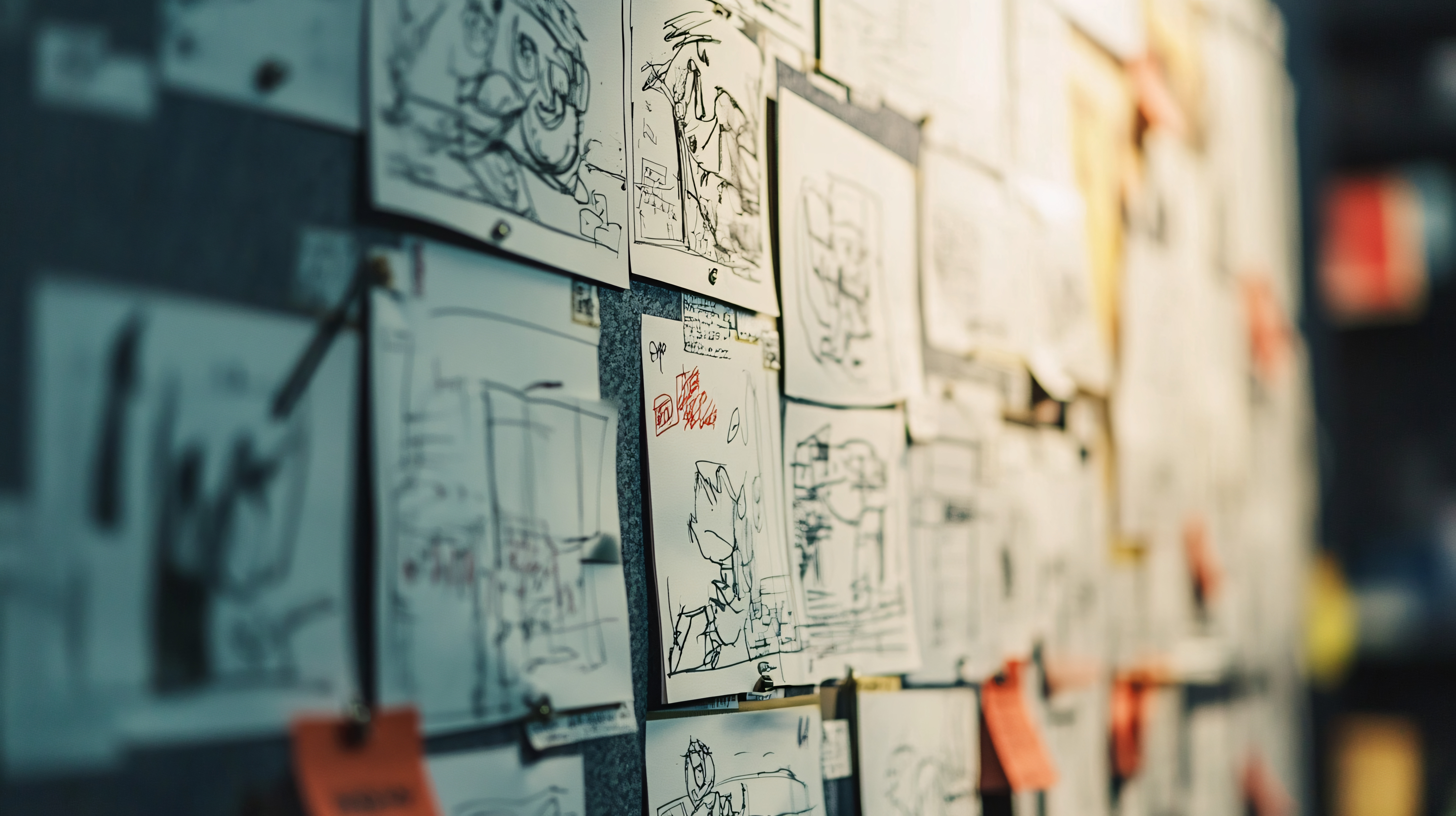
The storyboard is a drawn version of the film, organized into shots like a technical comic strip. It gives a concrete form to the script, tests the staging, and allows the entire team to “see” the film before it even exists.
In practical terms, the storyboard allows you to:
- translate the script into staging (framing, camera movements, shot sequence)
- test rhythm and storytelling (clarity, tension, humor, emotion)
- anticipate production needs (sets, characters, props, technical requirements)
- align the entire team (direction, animation, layout, editing, production)
In animation, the storyboard is often even more central than in live-action: it becomes the basis of the animatic and a working guide until the final render.
The role of the storyboard artist: much more than “drawing shots”
- Analyze the script and understand the intention: The storyboard artist reads the script (or treatment or brief) and identifies the dramatic stakes, rhythm, emotions to convey, and key moments to highlight. They must know how to make choices: what to show, what to suggest, where to place the camera, when to accelerate or slow down.
- Break scenes into shots (technical breakdown): They transform a scene into a coherent sequence of shots: shot sizes, angles, continuity, axes, transitions, and spatial clarity. This is where cinematographic grammar becomes essential.
- Stage the action and acting: In animation, the storyboard artist indicates acting intentions: key poses, attitudes, glances, reactions, and silhouette clarity. Even with a quick sketch, the goal is to remain clear and expressive.
- Clarify camera movements: Pan, travelling, tilt, zoom… The storyboard artist thinks in terms of staging and editing to build a fluid and effective visual reading.
- Prepare the animatic (often as a team): In many pipelines, the storyboard leads to an animatic: digitized storyboard panels assembled with timing, temporary sound, and rhythm tests. The animatic allows the film to be validated before animation begins.
- Revise, adapt, collaborate: A storyboard is not a final illustration but a production tool. It evolves according to feedback from the director, budget/time constraints, and narrative adjustments.
Where does a storyboard artist work?
- Animation (film, series, short films): This is the natural environment for storyboarding, working sequence by sequence with acting, rhythm, and intention. The storyboard is often very close to the directing process.
- Video games: Storyboard artists may work on cinematics, trailers, cutscenes, or narrative sequences. Some projects also involve interactive constraints or staging designed “in-engine”.
- Advertising / music videos / digital content: Here, the storyboard helps quickly visualize a concept, sell an idea to a client, and guide production. Clarity and impact are key.
- Film and TV (live-action): Storyboards are often used for complex sequences such as action scenes, VFX shots, or difficult scenes to shoot. However, animation studios remain the main talent pool for this profession.
Essential skills to become a storyboard artist
- Storytelling and rhythm: The ability to tell a story effectively through images—tension, reveal, ellipsis, punchline, emotion. A storyboard artist builds scenes that can sometimes be understood even without dialogue.
- Staging (cinema language): Composition, camera axes, shot continuity, shot sizes, depth, image readability—the staging is the core of the job.
- Fast, readable and expressive drawing: Perfect drawing is not expected, but effective drawing: clear silhouettes, functional perspective, and readable emotions.
- Visual culture: Films, animation, comics, photography, series—a storyboard artist constantly feeds their visual eye and draws from framing and staging references.
- Communication and teamwork: Storyboards evolve through feedback, constraints, and iterations. The ability to receive feedback, adapt quickly, and propose solutions is essential.
Storyboard tools today
Software varies depending on studios, but commonly includes:
- Storyboard Pro (widely used in production)
- Photoshop / Clip Studio Paint
- Procreate (quick sketches, mobility)
- After Effects / Premiere (depending on the pipeline and animatic)
- Graphic tablet / iPad
However, tools do not make the storyboard: what matters most is the ability to tell a story and structure shots clearly and effectively.
What does a storyboard artist’s day look like?
Depending on the studio, a typical day may include:
- reading a script or brief
- creating thumbnails to test shot structure
- clean storyboard panels for approval
- feedback meetings with the director
- corrections, iterations, and exports for the animatic
The storyboard phase is creative but also part of production: delivering work accurately and on time is essential.
Salary and career evolution
Salaries vary depending on the country, experience level (junior / senior / lead), production type, and employment status (employee, freelance, contractor).
This profession can evolve into:
- Lead storyboard artist / supervisor
- Assistant director / director (common in animation)
- Layout artist
- Animation roles (depending on career path)
- Episode director for animated series
In animation, storyboarding is often a direct gateway to directing positions.
Becoming a storyboard artist: the key element is the portfolio
Studios primarily recruit based on storytelling, staging, acting, clarity of sequences, and your ability to maintain a production rhythm.
A strong storyboard portfolio usually includes:
- short sequences (30 seconds to 2 minutes) told through shots
- dialogue scenes and action scenes
- thumbnails and clean versions
- possibly an animatic
The key: coherent staging choices and smooth readability, not just “beautiful drawings”.
Learning on your own is possible, but often long and fragmented. Storyboarding requires a method, regular feedback, an understanding of production pipelines, and concrete projects to deliver.
Learning storyboarding (and pre-production) with MoPA
At MoPA, you train in animated filmmaking through a “studio-style” approach. The school offers two programs (3D Animation Filmmaking and Stop Motion) and a teaching method at the crossroads of art, cinema, and technology, with project-based learning and numerous opportunities to produce short films.
For students aiming to become storyboard artists, the goal is clear: develop strong storytelling skills, clear staging, and production reflexes. In the 3D Animation Filmmaking program, the path begins after a preparatory year, followed by a 5-year curriculum structured into two cycles: a first 3-year cycle to acquire the fundamentals, and a second 2-year cycle focused on advanced skills and professionalization with a choice of career specializations (ideal for refining a pre-production career path).
- Designing strong narrative experiences: key foundations for learning how to structure shots, control rhythm, and tell stories through images.
- Teamwork and project-based learning: an approach that places you in situations close to real production (feedback, iterations, deliverables).
- Master’s level degree (Bac +5): the 3D Animation Filmmaking program leads to a recognized degree as an expert in 3D design, directing and animation (RNCP level 7).
In practical terms, the objective is for you to graduate with clear storyboard sequences, a strong command of visual storytelling and staging, and projects developed enough to strengthen your portfolio and apply for pre-production roles.
Is this career right for you?
You are likely to enjoy this profession if you:
- enjoy telling stories through images
- love cinema and the language of shots
- are comfortable with fast drawing (not “beautiful”, but “effective”)
- like finding creative staging solutions
- accept feedback and iterations
- want to work as part of a team within a structured pipeline
Conclusion: a profession at the heart of filmmaking
The storyboard artist is an architect of the film. They transform an intention into sequences, a script into staging, and build the clarity and rhythm of a project. Demanding and exciting, it is also a natural stepping stone toward directing in animation.
If you want to pursue this career, the objective is clear: train seriously and build a professional portfolio. The MoPA program is designed to help you progress in storytelling, shot structure, and production methods while guiding you toward a strong application portfolio.
FAQ: The Storyboard Artist Profession
1. What level of drawing is required to become a storyboard artist?
Above all, drawing needs to be clear, fast, and expressive. The most important elements are staging, storytelling, clear poses, and an understanding of cinematic language.
2. Which software do storyboard artists use?
Studios often use Storyboard Pro, but storyboard artists may also work with Photoshop, Clip Studio Paint, Procreate, and editing software for animatics.
3. How do you build a storyboard portfolio?
With short sequences told through shots (dialogue and action), thumbnails, clean versions, and ideally an animatic. The goal is to demonstrate storytelling, staging, and visual clarity.
4. What is the best way to learn storyboarding?
A specialized program helps you learn a structured method, receive regular feedback, and produce concrete projects to build a recruitment-oriented portfolio, such as the programs offered at MoPA.


 Brochure
 Get in touch
 Apply
Apply.jpg)
.jpg)
.jpg)
.jpg)